
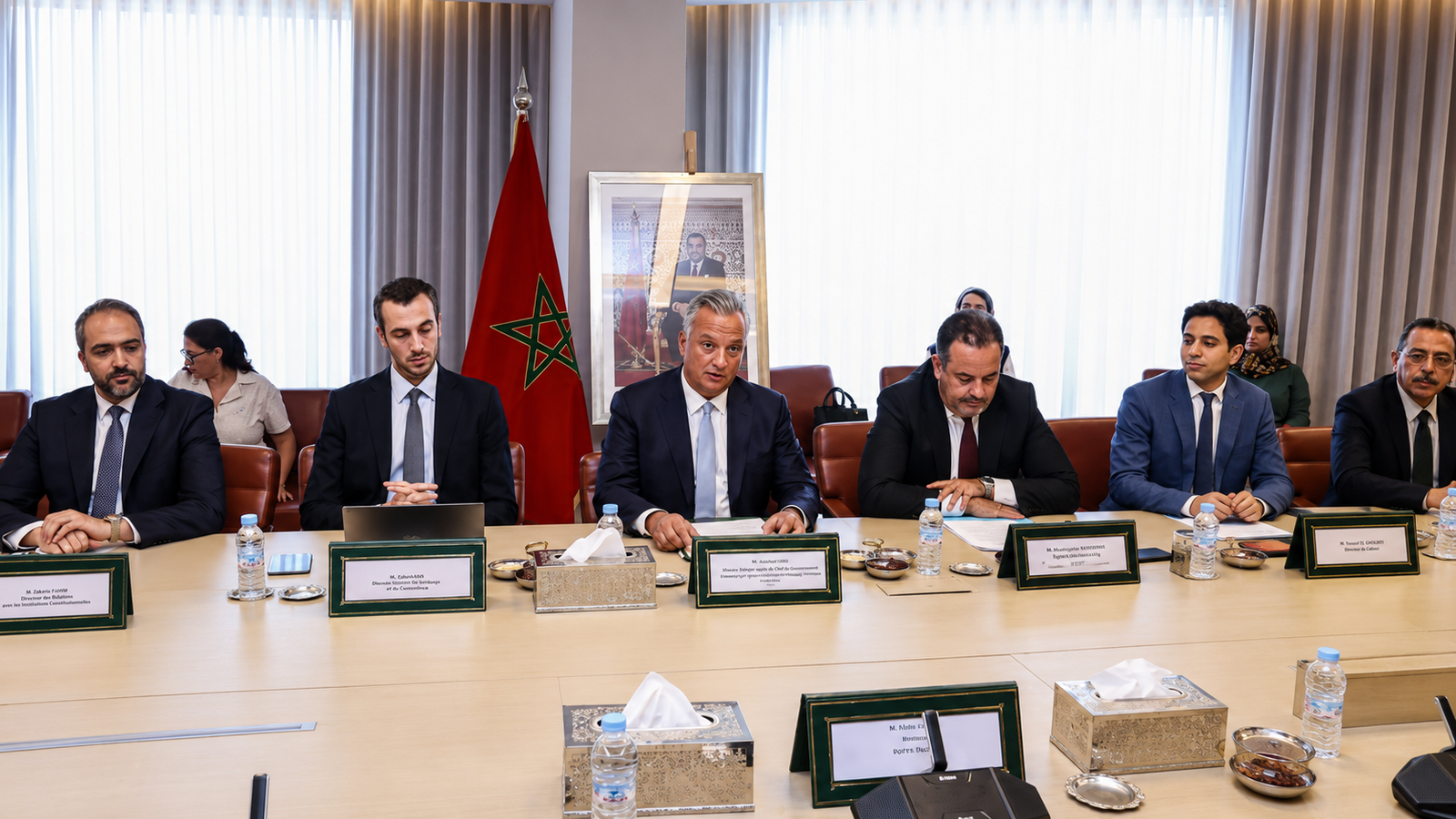
TAQA-Moeve and ORNX green hydrogen projects are moving forward in Morocco’s Sahara regions, marking a strategic step for energy, industry, employment, and skills development in Morocco.
A new milestone for green hydrogen in Morocco
Morocco is taking an important step forward in the development of its green hydrogen sector. On June 11 in Rabat, monitoring committees validated the first technical deliverables for two major projects led by TAQA-Moeve and ORNX Morocco, planned in the regions of Dakhla-Oued Eddahab and Laâyoune-Sakia El Hamra.
This progress confirms that green hydrogen is no longer just a future ambition or a national vision. It is gradually entering a more concrete phase, structured around technical studies, land allocation, industrial partnerships, and institutional follow-up.
For Morocco, the challenge goes far beyond energy production. It is about building a new industrial sector capable of strengthening the Kingdom’s competitiveness, attracting investment, and positioning the southern regions as a strategic platform for renewable energy and green molecules.
The Moroccan Sahara at the heart of the energy strategy
The regions of Dakhla-Oued Eddahab and Laâyoune-Sakia El Hamra are playing a central role in this dynamic. Their natural potential, geographic openness, and capacity to host large-scale industrial projects make them key territories for the energy transition.
The TAQA-Moeve project involves the Emirati group TAQA, responsible for developing renewable energy production capacities in the Dakhla region, and the Spanish company Moeve, which is expected to handle the production and commercialization of e-fuels, particularly for export markets.
On the other hand, ORNX Morocco is led by a joint venture bringing together Ortus Power Resources, Acciona, and Nordex. The project aims to produce green ammonia in the Laâyoune-Sakia El Hamra region.
These projects are part of Morocco’s Green Hydrogen Offer, an initiative designed to build a competitive national sector and strengthen Morocco’s position in the international renewable energy market.
An industrial ambition that requires strong skills
Behind the announcements, agreements, and investments, one question is becoming increasingly important: skills.
The success of the green hydrogen sector will, of course, depend on infrastructure, technology, and financing capacity. But it will also depend on the availability of qualified professionals capable of managing, building, maintaining, and developing these projects over the long term.
Energy engineers, environmental experts, industrial profiles, maintenance specialists, HSE managers, financial experts, legal advisors, supply chain professionals, project managers, export profiles, and senior executives will all be needed.
This is where the human dimension becomes strategic. Major projects are not built only with equipment. They are built by women and men capable of turning a vision into operational execution.
Recruitment as a strategic lever for new industries
The rise of green hydrogen in Morocco opens a new phase for the qualified employment market. Companies involved in these projects will need rare, technical, and sometimes international profiles, able to operate in complex industrial environments.
For CEOs, executives, and HR leaders, anticipation will be essential. Waiting until recruitment needs become urgent can create strong pressure, especially in sectors where skills are already in high demand.
In this context, the role of a recruitment agency in Morocco becomes increasingly important. Identifying the right profiles, assessing skills, understanding industrial challenges, and attracting qualified talent will be key success factors.
In Casablanca and across industrial regions, specialized recruitment firms will need to support companies with a more strategic approach: not only recruiting for a position, but building the teams capable of supporting a future-oriented industry.
Toward a new generation of green jobs
Green hydrogen could accelerate the emergence and structuring of new professions in Morocco. The energy transition does not only concern engineers. It also impacts finance, regulation, training, human resources, logistics, institutional communication, and management.
This evolution requires stronger coordination between companies, schools, universities, training centers, and recruitment professionals. The development of the sector will depend on the country’s ability to train, attract, and retain the talent it needs.
Morocco has significant strengths. But to turn these strengths into a long-term competitive advantage, the country will need to invest in human capital as much as in infrastructure.
The progress of the TAQA-Moeve and ORNX projects in the Sahara marks an important step in the development of Morocco’s green hydrogen sector. This momentum confirms the Kingdom’s ambition to become a major player in renewable energy and green molecules.
But beyond the energy dimension, these projects raise a central question: are we ready to support this transformation with the right skills?
Companies that anticipate their talent needs today will be better positioned tomorrow.
Because major industrial transitions are not built only with technologies.
They are built with vision, organization, and, above all, strong human skills.