
LabelVie–Retail Holding: When a Merger and IPO Become a Value-Creation Challenge
Morocco's retail sector may be approaching one of its most significant capital-market transformations in recent years.
On November 20, 2026, LabelVie shareholders are expected to vote on the proposed merger by absorption of LabelVie into Retail Holding, its reference shareholder.
What makes the transaction particularly significant is its structure: the merger is expected to become effective simultaneously with the listing of Retail Holding on the Casablanca Stock Exchange.
This is therefore more than a legal combination of two companies.
It is the creation of a new listed, multi-brand retail group with a different capital structure, governance framework and growth ambition.
Behind the financial transaction lies a fundamental question:
how can a legal and capital-market merger be translated into sustainable value creation?
A major financial restructuring
The first dimension of the transaction is naturally financial.
The proposed exchange ratio is 8 Retail Holding shares for every 11 LabelVie shares.
LabelVie shareholders other than Retail Holding would therefore receive newly issued Retail Holding shares.
The merger-related capital increase would amount to approximately MAD 105.67 million, through the issuance of more than one million new shares.
LabelVie's net assets contributed to the transaction are valued at approximately MAD 12.46 billion, while Retail Holding would recognize a merger premium of approximately MAD 11.83 billion.
These figures demonstrate that the transaction goes well beyond an administrative reorganization.
It redesigns the group's capital structure and shifts the listed entity from LabelVie to Retail Holding.
The merger and IPO form one transformation
The merger is expected to become effective on the same date that Retail Holding begins trading on the Casablanca Stock Exchange.
This simultaneous structure is particularly important.
It is designed to enable LabelVie shareholders to become shareholders of the combined group while retaining immediate market liquidity.
LabelVie would transfer all assets, rights and liabilities to Retail Holding and would subsequently be dissolved without liquidation and delisted.
From a capital-markets perspective, the transaction therefore provides continuity to investors.
From an organizational perspective, however, it creates a new structure that must operate under a different governance framework.
Scale does not automatically create value
The transaction carries significant growth expectations.
According to projections published when the proposed merger was initially announced, combined revenue could reach MAD 47 billion by 2030, compared with MAD 21.7 billion in 2025.
EBITDA is expected to reach approximately MAD 3.8 billion, compared with MAD 1.7 billion in 2025, alongside an expected improvement in margins.
Net income could also exceed MAD 1.4 billion by 2030.
These targets demonstrate a clear ambition to scale.
But revenue growth alone does not guarantee value creation.
The real question becomes:
can the group convert additional scale into sustainable improvements in margins, productivity and returns on capital?
This is where integration quality becomes critical.
Synergies need to move beyond the business plan
The financial logic of a merger often depends on synergies.
In the LabelVie–Retail Holding project, the proposed combination is expected to strengthen coordination between brands, pool certain capabilities and improve efficiency across several functions.
Greater scale may also increase purchasing power, improve supply-chain economics and allow central functions to operate more efficiently.
However, an announced synergy creates no value until it is actually delivered.
Management needs to decide:
which functions should be integrated,
which processes should be standardized,
which teams should remain autonomous,
which systems need to be connected,
and what investments will be required to achieve the expected efficiencies.
Finance can estimate a synergy.
The organization must ultimately deliver it.
A multi-brand retail group creates management complexity
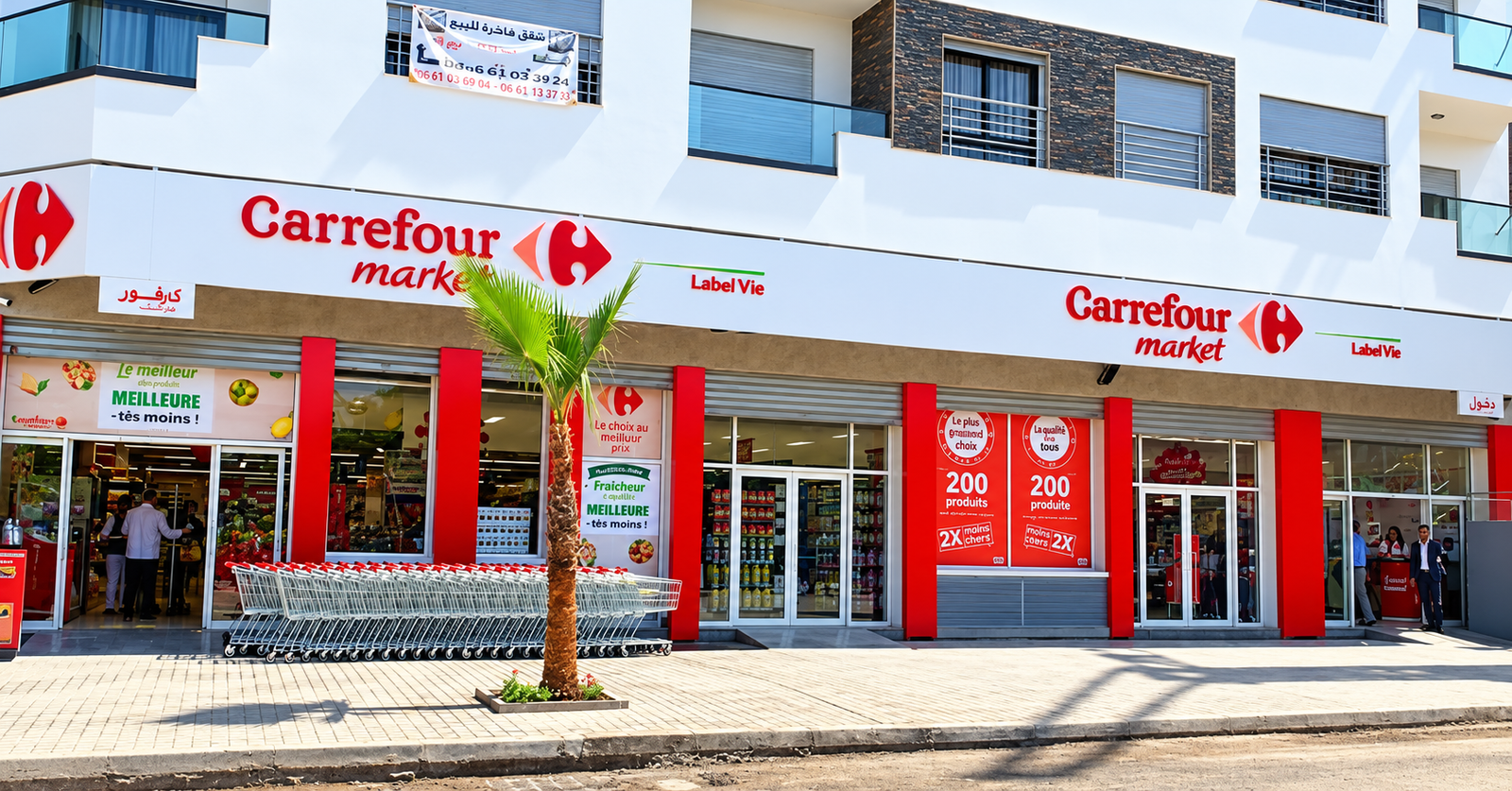
The combined group is expected to include activities built around brands such as Carrefour, Atacadao, Supeco, King Cash, Kiabi, Burger King and Ansamble.
This diversification creates opportunities.
It provides exposure to different customer segments and may create additional avenues for growth.
But it also increases complexity.
A grocery retailer is not managed in exactly the same way as a fashion franchise or a restaurant business.
Business cycles differ.
Margins differ.
Customer expectations differ.
Operational requirements differ.
The group therefore needs to find the right balance between centralization and autonomy.
Excessive centralization can reduce agility.
Insufficient integration can prevent synergies.
Governance becomes a financial variable
The proposed structure also includes double voting rights for certain long-term registered shareholders.
This highlights another important dimension of the transaction: control and governance.
A listed company needs to balance several objectives:
preserve long-term strategic direction,
maintain governance stability,
protect shareholder interests,
and meet the transparency requirements of public markets.
Governance is therefore not simply a legal matter.
It directly affects an organization's ability to make decisions, allocate capital and maintain strategic consistency.
For a larger and more diversified group, this becomes particularly important.
The IPO raises expectations for the finance function
Retail Holding's listing will also change the requirements placed on Finance.
Public markets expect visibility.
Investors want to understand growth, cash generation, leverage, margins and returns on investment.
The finance function therefore needs to provide timely consolidated visibility across different activities.
Controlling becomes more strategic.
Reporting needs to become more precise.
Investor communication becomes increasingly important.
And capital-allocation decisions need to be clearly explained.
A new store, acquisition or international expansion should no longer be evaluated only on its ability to increase revenue.
It must also demonstrate its ability to create value.
Human Capital becomes a financial issue as well
The same logic applies to people.
A merger does not only combine balance sheets.
It combines teams, leadership structures, cultures and working practices.
The questions quickly become operational:
Who will lead the different businesses?
Who will manage integration?
Which roles overlap?
Which people are critical to retain?
What new capabilities are required?
Which executives are ready to manage a more complex multi-brand organization?
These are Human Capital questions in execution.
But their consequences are financial.
Poor integration can delay synergies.
The departure of a key executive can affect performance.
Unclear responsibilities can slow decisions.
Human Capital therefore becomes one of the mechanisms through which the financial value of the merger is protected.
Support functions become a growth platform
Finance, HR, IT, procurement, legal, internal control and supply chain will all play important roles.
At scale, these functions should not be viewed merely as overhead.
They become growth infrastructure.
Effective procurement can convert scale into stronger supplier economics.
An integrated supply chain can improve product availability and reduce costs.
Connected information systems can improve performance visibility.
A structured HR function can support internal mobility and identify future leaders.
The quality of these cross-functional platforms can therefore have a direct impact on value creation.
Retention becomes critical during transformation
Merger periods naturally create uncertainty.
Employees may question their future roles, reporting lines or career prospects.
High-performing profiles may also become more receptive to external opportunities.
Critical talent therefore needs to be identified early.
Organizations should determine:
which roles are difficult to replace,
which expertise is strategically important,
which leaders are essential,
and which teams directly protect operational performance.
Human integration should not begin after closing.
It needs to begin before it.
Building an organization capable of delivering the 2030 ambition
Ultimately, the main challenge is not completing the legal merger.
It is building an organization capable of delivering the group's 2030 targets.
That requires alignment between:
strategy,
finance,
governance,
technology,
operations,
and Human Capital.
Investment needs to match execution capacity.
Leadership needs to evolve with complexity.
Central functions need to support brands without slowing them down.
And governance needs to remain clear enough to enable timely decisions.
The transaction creates the opportunity. Integration creates the value.
The LabelVie–Retail Holding project is first and foremost a major financial and capital-market transaction.
But merger success is not measured on completion day.
It is measured afterward.
By the ability to deliver expected synergies.
Improve margins.
Maintain growth.
Retain critical talent.
Develop future leaders.
And operate different businesses as a coherent group.
Finance structures the transaction.
Governance organizes complexity.
Human Capital turns synergies into performance.
That intersection is where the long-term value of the combined group will ultimately be created.
Sources: TelQuel and Médias24, October 21, 2026; official LabelVie–Retail Holding proposed merger announcement.