
Morocco’s car industry: Renault remains the country’s 2nd largest company despite a 6% drop. The shift to new powertrains will be a skills challenge.
According to the Les 500 Global 2026 ranking, presented on October 22 in Casablanca and reported by LesEcoAuto, Groupe Renault Maroc keeps its place as the Kingdom’s second-largest company.
Its revenue reached MAD 59.2 billion in 2025, down from MAD 63.1 billion in 2024, a 6% decline. Renault thus remains behind OCP S.A., which tops the ranking with MAD 113.9 billion, up 17.5%. ONEE completes the podium with MAD 41.5 billion, down 2.5%.
Behind the ranking lies a question for Morocco’s entire automotive industry: how do you stay competitive while the product itself is changing?
A leading industrial platform
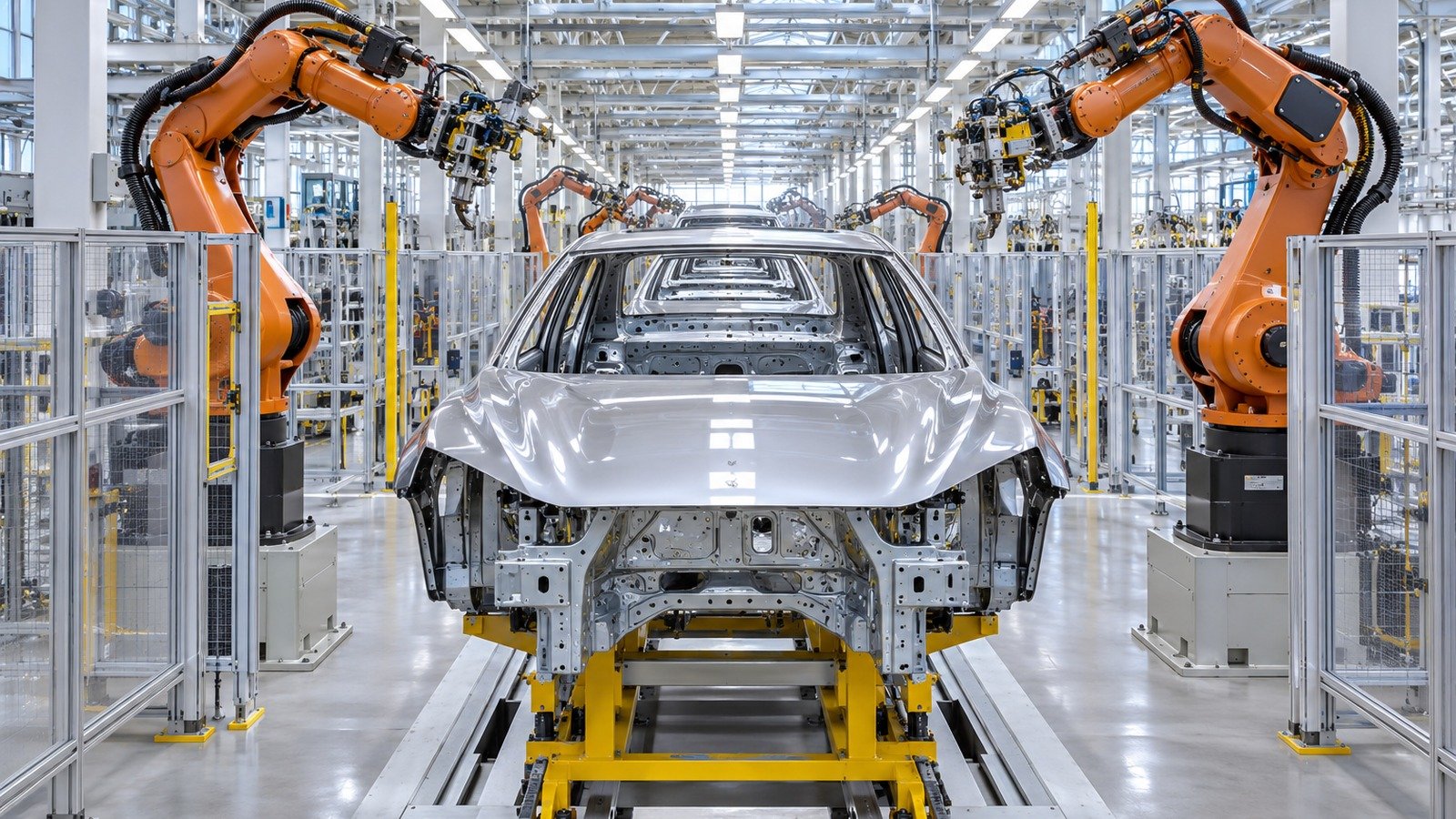
With its two plants in Tangier and Casablanca, the group is a key link in industrial production, exports and the automotive supplier ecosystem.
In 2025, the two sites produced 394,474 vehicles, 82% of them exported to 63 countries. Production volumes fell by 5% compared with 2024.
LesEcoAuto highlights the main challenge: preserving the competitiveness of the national industrial platform in the face of changes in the international car market and the transition to new powertrains.
That competitiveness is not only about costs or volumes. It is increasingly about skills.
Why the transition is first a skills issue
Changing powertrains is not just changing a part. It means reshaping entire jobs.
An industry preparing for new powertrains needs profiles that were marginal on a traditional assembly line:
- electronics and electrical engineering skills;
- specialists in high-voltage system safety;
- people able to integrate embedded software;
- maintenance technicians for automated equipment;
- quality and process engineers able to industrialize new processes.
These profiles are in demand worldwide. A country that wants to remain an automotive platform must be able to train, attract and retain them.
Train rather than replace
When technology changes, the temptation is to look for new profiles outside. But an industrial platform rests on thousands of employees whose experience has value.
The most solid approach usually combines:
- reskilling existing operators and technicians;
- internal training paths, built with schools and training centers;
- targeted recruitment of a few experts able to pass on their knowledge;
- strategic workforce planning aligned with the industrial timeline.
With the example of Akdital Academy, we showed how internal training can become a growth lever rather than a cost.
Suppliers, the other half of the equation
A carmaker’s performance also depends on its ecosystem. Suppliers located around the plants must go through the same transition, often with fewer resources.
For these companies, often SMEs or mid-sized subsidiaries, the challenge is twofold: upgrading their own skills and finding managers able to lead the change.
This is where human capital becomes a collective issue. An industrial platform is only competitive if its entire value chain is.
The role of frontline managers
In an industrial transformation, frontline managers, team leaders and workshop heads, are on the front line.
They organize on-the-job training, support employees worried about their jobs and keep production running while processes change.
Recruiting, training and retaining them is as strategic as investing in machines. The same lessons appear in other sectors, such as aviation in Africa or major construction projects ahead of 2030: industrial growth runs into skills first.
What industrial HR departments must anticipate
For an industrial HR department, the transition must be prepared several years ahead:
- map current skills and those the new products will require;
- identify shortage roles and start recruiting before the need becomes urgent;
- build partnerships with engineering schools and vocational training centers;
- review pay policy to keep rare, highly sought-after profiles;
- prepare management succession at each site.
These projects require an HR function positioned at a strategic level. In many industrial companies, that means recruiting an HR Director able to work with industrial management as an equal.
Staying in the ranking means preparing skills
Renault Maroc’s second place, despite a year of decline, confirms the weight of the automotive industry in Morocco’s economy.
But a ranking reflects the past. Tomorrow’s competitiveness is being built now, and it largely depends on the people able to produce the next generation of vehicles.
The real question is therefore not only: how many vehicles will Morocco produce tomorrow?
It is also: who will be able to produce them?
Does your industrial company need to strengthen its technical teams, management or HR leadership? Our industrial recruitment firm can help, from expert technicians to senior executives. Tell us about your needs.
Frequently asked questions
Where does Renault rank among Morocco’s largest companies?
According to the Les 500 Global 2026 ranking, Groupe Renault Maroc is the Kingdom’s second-largest company, with MAD 59.2 billion in revenue in 2025, behind OCP S.A. (MAD 113.9 billion) and ahead of ONEE (MAD 41.5 billion).
How many vehicles did Renault produce in Morocco in 2025?
The Tangier and Casablanca plants produced 394,474 vehicles in 2025, 82% of them exported to 63 countries, a volume down 5% from 2024.
Why is the automotive transition a human capital issue?
Because new powertrains require new skills in electronics, high voltage, software and automated maintenance. Training, attracting and retaining these profiles determines the competitiveness of the industrial platform.
News source: LesEcoAuto, “Morocco’s 500 largest companies: Renault keeps second place with MAD 59.2 billion” (in French), October 23, 2026.