
Morocco’s defense industry: nearly MAD 22 billion mobilized and 50,000 jobs targeted by 2035. The first challenge will be training and attracting talent.
On November 25, 2026, at the Royal Palace in Rabat, King Mohammed VI, accompanied by Crown Prince Moulay El Hassan, presided over the signing of two framework agreements to develop the national defense and security industry, Médias24 reported.
The first covers the financing of the roadmap. The second covers the mobilization of the private and financial sectors. Together, they bring nearly MAD 22 billion mobilized by public partners.
Behind the amounts, one figure should catch the attention of every HR department: at least 50,000 direct and indirect jobs by 2035.
Key figures of the roadmap
According to Ali Seddiki, director general of AMDIE, who was tasked with overseeing the operational design of the roadmap:
- nearly MAD 22 billion mobilized by public partners;
- 40% of the needs of the Royal Armed Forces and security bodies could be met by manufacturers based in Morocco;
- at least MAD 50 billion in annual revenue targeted over time, more than 65% from exports;
- at least 50,000 jobs, direct and indirect, by 2035.
A strategic agency named DIFAA (Defense Industry Facilitation and Acceleration Agency) will steer the rollout and monitor the commitments of public and private players.
Which jobs lie behind the priority sectors?
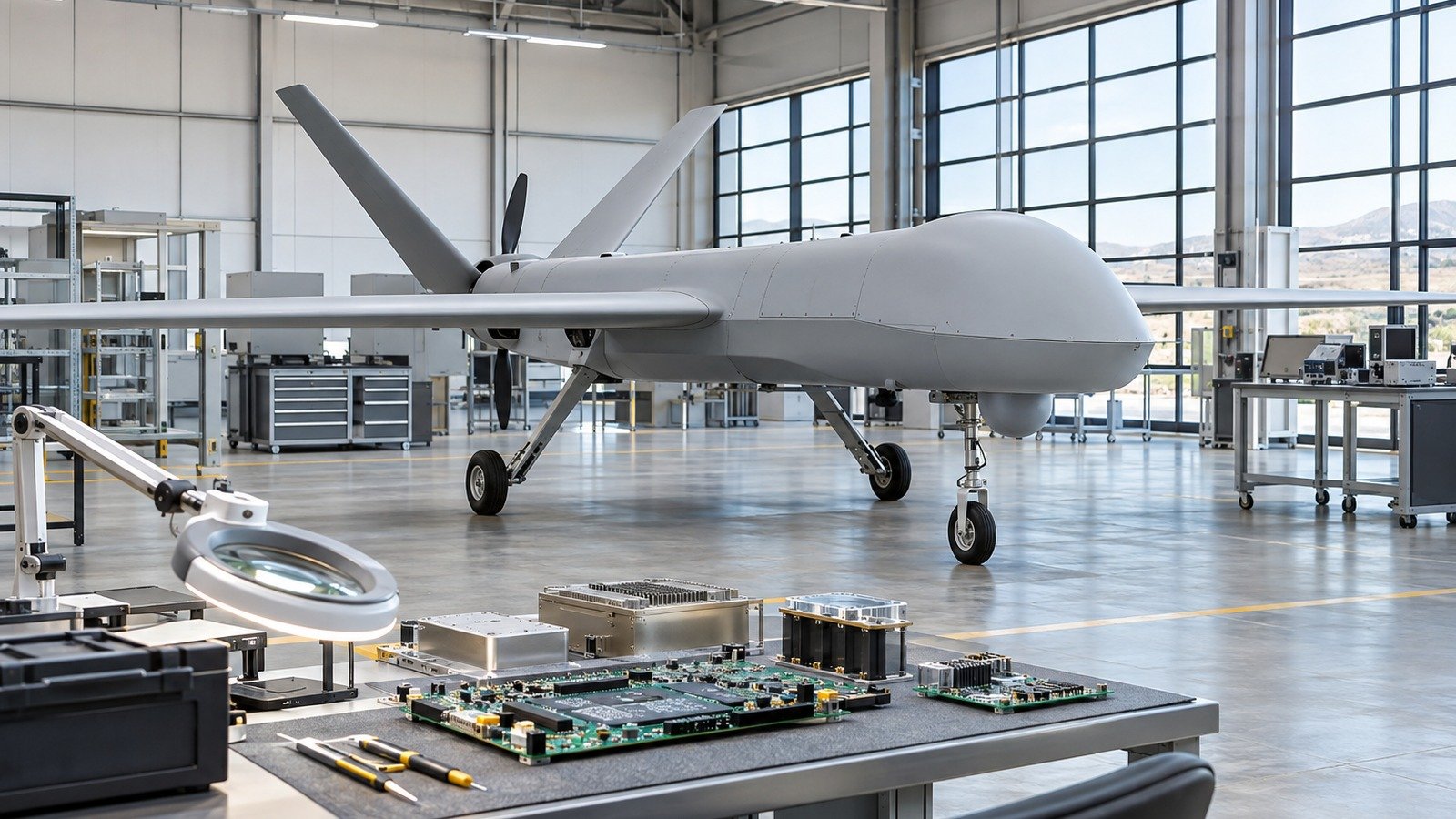
The target sectors are specific: drones and autonomous systems, land systems, naval systems, defense electronics, cyber defense and artificial intelligence.
These are high-technology industries. They require profiles that are already scarce:
- engineers in electronics, embedded systems and mechatronics;
- cybersecurity and artificial intelligence specialists;
- systems engineers able to integrate complex subsystems;
- quality, certification and testing managers;
- program directors and long-term industrial project managers;
- skilled technicians and operators for production and maintenance.
These profiles are also sought by the automotive, aerospace, energy and digital sectors. The new industry will therefore compete directly with sectors already short of the same skills, as we saw with the automotive industry’s transition and aviation in Africa.
Human capital at the center
Ali Seddiki stressed that human capital has been given a central place, notably through training. A national research and development ecosystem will be set up, drawing on local talent and Moroccans abroad.
The presence of Mohammed VI Polytechnic University (UM6P) among the signatories of the first agreement points the same way: training and research are part of the plan from the start.
The DIFAA agency, for its part, is to use several levers, including industrial offsets, public procurement, land, skills and innovation.
Attracting diaspora talent: a strategy to build
Mobilizing Moroccans abroad is a strong lever. Many Moroccan engineers and executives work in high-technology industries overseas.
But bringing them back, or getting them to work with Morocco, cannot be decreed. It requires:
- ambitious technical projects that match their experience;
- pay packages that are credible against international offers;
- relocation conditions designed for families;
- flexible forms of collaboration: assignments, remote expertise, mentoring.
It is long-term, direct-approach work, closer to executive search than to standard recruitment.
Training at scale: the role of companies
50,000 jobs will not be filled by hiring experts alone. Most positions will have to be trained, often from existing industrial profiles.
Companies investing in the sector will benefit from building their own pathways: internal academies, school partnerships, mentoring by experts. With the example of Akdital Academy, we showed how internal training can become a growth lever.
Subcontracting SMEs will also be affected. To join such a demanding supply chain, they will have to raise their quality, certification and management standards.
What HR departments must anticipate
For companies considering a position in the sector, several HR projects should start early:
- map available skills and those that are missing;
- identify key roles to fill first: program management, systems engineering, quality;
- build partnerships with universities and engineering schools;
- define a pay policy able to retain highly sought-after profiles;
- prepare management: a new industry needs managers able to build teams from scratch.
These topics belong at executive level. They require a strategic HR function and leaders experienced in high-technology industry.
An industry that will be built by people first
Funding has been announced, the agency created, the sectors identified. The roadmap’s success will now largely depend on bringing together the right skills at the right time.
The real question is therefore not only: how many jobs will the industry create?
It is also: who will be able to fill them, and who will train them?
Is your company preparing its industrial positioning and does it need to recruit engineers, experts or executives? Our industrial recruitment firm in Morocco can help, from IT, cyber and data profiles to senior executive recruitment. Tell us about your needs.
Frequently asked questions
How many jobs is Morocco’s defense industry expected to create?
At least 50,000 direct and indirect jobs by 2035, according to the roadmap presented on November 25, 2026.
What are the priority sectors?
Drones and autonomous systems, land and naval systems, defense electronics, cyber defense and artificial intelligence.
What is the DIFAA agency?
The Defense Industry Facilitation and Acceleration Agency is the strategic agency in charge of steering the roadmap, monitoring stakeholders’ commitments and using the levers of industrial offsets, public procurement, land, skills and innovation.
News source: Médias24, “King Mohammed VI presides over the signing of two agreements mobilizing nearly MAD 22 billion for the defense industry” (in French), November 25, 2026.